Rehabilitation in the water, prescribed and supervised
Our therapy pool was built for rehabilitation, not for swimming. Warm water, controlled depth and a physiotherapist in the water with you at all times.
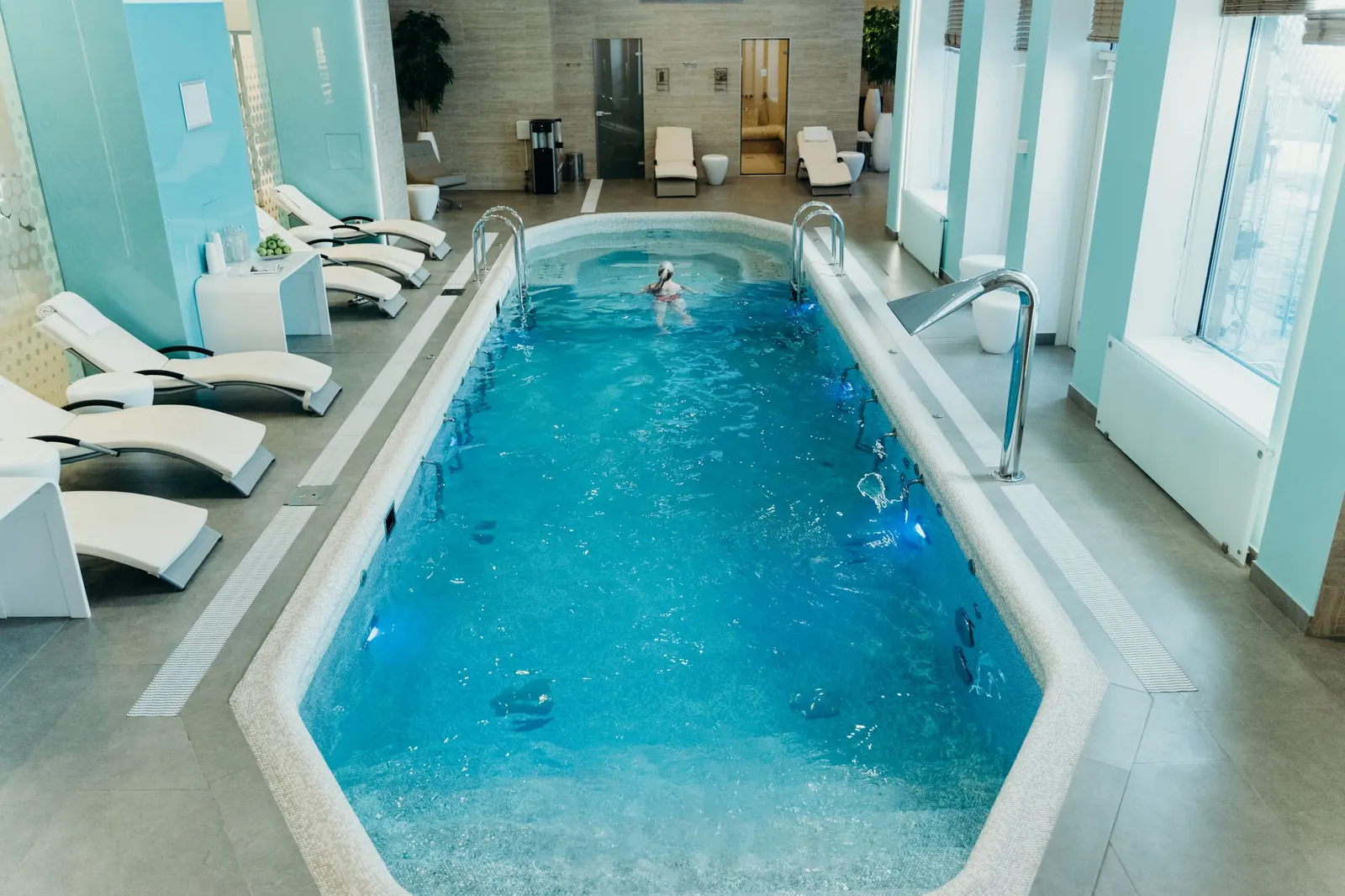
Designed in detail for people who find moving difficult
The pool measures 10 by 5 metres, with a depth of 0.90 m to 1.40 m and water heated to 33 °C. The warmth relaxes the muscles and eases pain; buoyancy allows movements that aren't yet possible on land.
Sessions follow the physiatrist's prescription and use recognised hydrotherapy techniques such as the Halliwick concept and Bad Ragaz rings. Water quality is checked several times a day.
- Hydraulic hoist and steps with double handrails
- Underwater parallel bars for gait training
- Accessible changing rooms and lockers
- A physiotherapist in the water at every session
Pool sessions
Every session lasts 45 minutes. Groups are organised by clinical goal, so the whole group works at the same pace.
| Time | Monday | Tuesday | Wednesday | Thursday | Friday | Saturday |
|---|---|---|---|---|---|---|
| 08:00 - 08:45 | Individual | Individual | Individual | Individual | Individual | Spine (group) |
| 09:00 - 09:45 | Orthopaedics (group) | Spine (group) | Orthopaedics (group) | Spine (group) | Orthopaedics (group) | Individual |
| 10:00 - 10:45 | Neurology (small group) | Individual | Neurology (small group) | Individual | Neurology (small group) | Osteoarthritis and fibromyalgia (group) |
| 11:00 - 12:15 | Individual | Individual | Individual | Individual | Individual | Individual |
| 14:00 - 16:45 | Individual | Individual | Individual | Individual | Individual | - |
| 17:00 - 17:45 | Paediatrics | Paediatrics | Paediatrics | Paediatrics | Paediatrics | - |
| 18:00 - 18:45 | Osteoarthritis and fibromyalgia (group) | Individual | Osteoarthritis and fibromyalgia (group) | Individual | Spine (group) | - |
| 19:00 - 19:45 | Spine (group) | Orthopaedics (group) | Individual | Orthopaedics (group) | - | - |
Groups of up to 6 people; neurology groups up to 3. The pool closes for maintenance between 12:30 and 14:00. On Saturdays the last session ends at 12:15.
What to bring, and when to stay out of the water
What to bring
Arrive 15 minutes early so you have time to change without rushing.
- Swimsuit (for men, close-fitting swim shorts or trunks)
- Swimming cap, compulsory
- Non-slip pool shoes or flip-flops
- Towel and bathrobe
- A coin or padlock for the locker
- A bottle of water: warm water dehydrates more than you'd think
Contraindications
In these situations hydrotherapy should be postponed or is not suitable. The physiatrist always checks at your consultation.
- Fever, active infection or diarrhoea in the last 48 hours
- Open wounds or a surgical scar that hasn't closed yet
- Untreated skin or fungal infections
- Uncontrolled incontinence
- Uncontrolled epilepsy
- Uncontrolled heart failure or high blood pressure
- Chlorine allergy
Questions about hydrotherapy
Do I need to be able to swim?
No. You can stand everywhere in the pool and the physiotherapist is always in the water with you.
When can I start after surgery?
Usually once the scar has fully closed, which tends to be two to three weeks after surgery. The physiatrist always decides, together with your surgeon.
Can children have hydrotherapy?
Yes, from age 3, in one-to-one sessions in the late afternoon. A parent accompanies the child in the changing room.
Is hydrotherapy covered by insurance?
Many insurers and health schemes cover hydrotherapy when there is a medical prescription. We confirm your cover before your first session.